
 Home
Home Blog
Blog News
News Mushroom Blog
 About
About Contact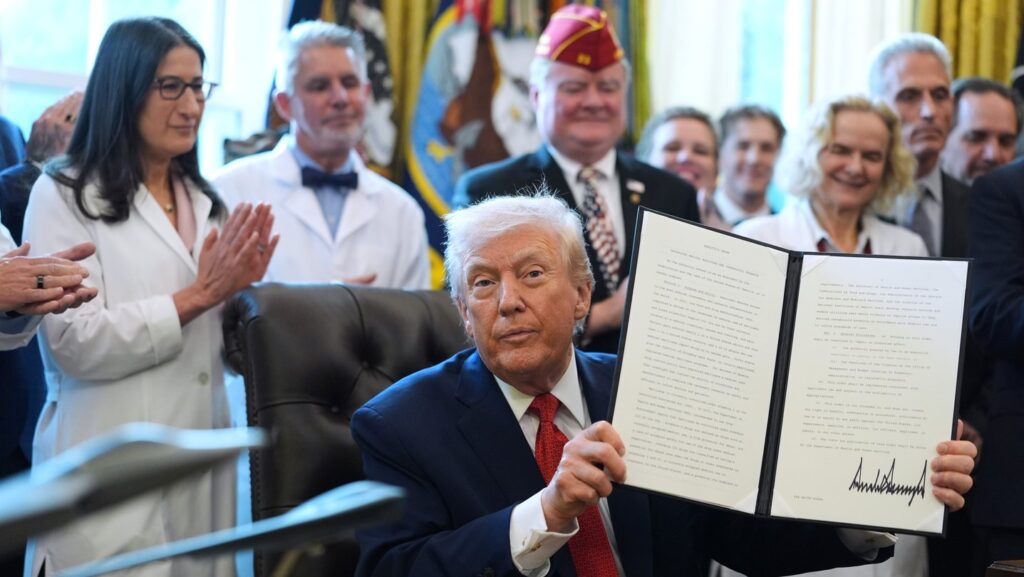
President Donald Trump announces that marijuana (weed) will be reclassified on a federal level from a Schedule I drug to Schedule III, shifting it away from drugs like heroin and ecstasy in its previous category. What does this shift mean to weed enthusiasts, elderly citizens, researchers, and the cannabis industry as a whole?
Trump signs an executive order to reclassify marijuana
President Trump signed an executive order on Thursday, December 18, 2025, to change the federal government’s classification of marijuana, or cannabis, under the U.S. Controlled Substances Act.
Under this order, marijuana would be moved from Schedule I (considered to have no accepted medical use and a high potential for abuse) to Schedule III (recognized as having accepted medical use and a lower potential for dependence), a category that includes drugs with accepted medical use and a lower risk of abuse compared with Schedule I drugs like heroin.
The purpose of this shift is to acknowledge that marijuana has legitimate medical uses and to ease federal restrictions on research, banking, and business operations related to cannabis.
Trump characterized the decision as a “common sense” policy change aimed at expanding medical research and helping patients with conditions responsive to cannabis therapies.
Does this executive order legalize marijuana (weed)?
The executive order does not legalize marijuana nationwide for recreational use, nor does it eliminate all federal penalties—those changes would require action by Congress or formal rulemaking by the DEA.
Key impacts of the reclassification by Donald Trump
- Easier Scientific Research: Federal researchers and institutions can more easily study marijuana’s potential medical benefits, side effects, and therapeutic value without the strict regulatory hurdles of Schedule I status.
- Potential Economic Effects: Federal reclassification can reduce tax and regulatory burdens on cannabis-related businesses and improve access to banking, although recreational marijuana remains illegal federally.
- Medical Acknowledgment: Moving marijuana to Schedule III formally recognizes its medical use in treating symptoms like chronic pain, nausea, and other conditions where evidence supports benefit.
What does this reclassification mean to the public, health departments, and the cannabis industry?
For years, marijuana’s designation as a hazardous and addictive substance has been widely criticized. Moving it to a different category reflects a federal acknowledgment that cannabis has recognized medical benefits and a lower risk of abuse than previously classified. Trump’s order does not affect recreational marijuana, nor does it include any changes to criminal justice laws.
The action allows for a pilot program that reimburses Medicare patients for products containing CBD, a widely used cannabis-derived compound that does not produce a high.
Under the order, marijuana would be shifted from Schedule I, a category that includes heroin, to Schedule III, which also includes ketamine. The move, however, would not legalize marijuana as some states have done and would not change how law enforcement agencies handle marijuana-related arrests, according to senior administration officials who spoke to the New York Times.
Placing marijuana in Schedule III would align it with certain prescription pain medications while keeping recreational use illegal at the federal level. The change would still need to go through the Drug Enforcement Administration’s (DEA) formal rule-making process. The reclassification could make scientific research easier as well as ease burdens on legal cannabis businesses by reducing strict federal tax penalties and improving access to banking services.
The order directs the Department of Health and Human Services (HHS) to develop “research methods and models utilizing real-world evidence” to study the long-term health effects of medical marijuana and hemp-derived cannabinoid products.
It also states the White House will work with Congress to expand access to appropriate full-spectrum CBD products while restricting products that pose serious health risks, citing a current lack of FDA approval. According to the order, one in five US adults and nearly 15% of seniors reported using CBD in the past year.
How Americans view the effects of legalizing marijuana for recreational use
According to the Pew Research Center, about half of Americans (52%) say that legalizing the recreational use of marijuana is good for local economies; just 17% think it is bad, and 29% say it has no impact.
More adults also say legalizing marijuana for recreational use makes the criminal justice system more fair (42%) than less fair (18%); 38% say it has no impact.
Trump’s order drew praise from organizations that have been working to change US cannabis regulations.
Tim Barash, chairman of the Coalition of Cannabis Scheduling Reform, said in a statement that the move represents a “fundamental shift” in government and social perceptions of the drug.
“This change will empower the 425,000 people working in the US cannabis industry and bring in new talent, capital, and awareness to an industry that has a positive impact on millions of people’s lives,” Mr. Barash said.


Pingback: How to Effectively Use a Jeeter Juice Pen: A Complete Guide - Shroom Bloggers